Closet Organization Solutions for a Clutter-Free Home
The Ultimate Guide to Closet Organizers: Maximize Every Inch for a Clutter-Free Home
Estimated reading time: 19 minutes
Key Takeaways
- Effective closet organization maximizes space, saves time, and enhances home functionality, suitable for various closet types from reach-ins to walk-ins.
- Key organizational components include drawers for concealed storage and wire racks for visibility, durability, and cost-effectiveness.
- Tailored solutions exist for specific spaces like walk-ins (zone planning, luxury features), corners (specialized shelving, pull-outs), and bathrooms (drawers for hygiene).
- Accessories like purses and handbags benefit from dedicated organizers such as shelf dividers, hanging units, and clear bins to maintain shape and accessibility.
- Specialized closets like baby and coat closets require flexible, sturdy, and easily accessible solutions, with budget-friendly options available from retailers like Menards, and a choice between DIY or professional installation.
Table of Contents
- Unlock the Potential of Your Closet: A Comprehensive Guide to Smart Organization
- The Foundation of Functionality: Essential Closet Organizer Types
- Tailoring Solutions for Specific Spaces: From Walk-Ins to Corners
- Mastering Accessory Organization: Purses, Handbags & More
- Specialized Closet Needs: Baby, Coat & More
- Budget-Friendly & Practical Solutions: Organization for Everyone
- Designing Your Dream Closet: Tips for Success
- Frequently Asked Questions about Closet Organizers
- Q1: What is the most effective way to organize a small closet?
- Q2: Are wire racks or solid shelves better for closets?
- Q3: How can I protect my expensive handbags in the closet?
- Q4: What are some budget-friendly closet organization ideas?
- Q5: How do I organize a shared closet effectively?
- Q6: Can I really use a baby closet organizer for older kids?
- Conclusion: Embrace a Life of Organized Serenity
Unlock the Potential of Your Closet: A Comprehensive Guide to Smart Organization
Are you tired of rummaging through cluttered closets, struggling to find what you need? Do you dream of a home where every item has its place, and your storage spaces contribute to a sense of calm rather than chaos? You’re not alone. Closet organization is more than just tidying up; it’s about reclaiming space, saving time, and creating a more functional and beautiful living environment.
In this ultimate guide, we’ll dive deep into the world of closet organizers, exploring a vast array of solutions designed to maximize every inch of space in your home. From essential components like closet organizer with drawers and closet organizer wire racks to specialized systems for walk-ins, purses, and even baby essentials, we’ll cover everything you need to know. We’ll explore innovative ideas for challenging spaces like corners and coat closets, and even touch upon budget-friendly options that prove organization doesn’t have to break the bank.
Whether you’re looking to upgrade a cramped reach-in, design a luxurious walk in closet organizer, or simply find the perfect purse organizer for closet, this guide is your definitive resource. Get ready to transform your closets from chaotic storage areas into beautifully organized havens.
The Foundation of Functionality: Essential Closet Organizer Types
Every great organizational system starts with foundational pieces. Understanding the core types of closet organizers will help you build a system that perfectly suits your needs, whether you’re starting from scratch or integrating new components into an existing setup.
Closet Organizer with Drawers: The Secret to Hidden Storage and Order
When it comes to keeping items neatly tucked away and maintaining a streamlined appearance, a closet organizer with drawers is an absolute game-changer. Drawers are invaluable for a variety of items that can quickly become messy when left on open shelves.
Why Drawers Are Indispensable:
- Concealed Clutter: Drawers excel at hiding smaller items, lingerie, socks, t-shirts, workout gear, or even important documents and personal effects, creating a visually calm and uncluttered space.
- Protection: They protect delicate garments from dust and light exposure, helping them last longer.
- Defined Spaces: Each drawer offers a dedicated space, making it easier to implement category-based organization (e.g., one drawer for pajamas, another for activewear).
- Versatility: Available in various depths and widths, drawers can be integrated into built-in systems, freestanding units, or even as pull-out baskets within shelving.
- Maximizing Vertical Space: When stacked, drawer units can utilize vertical space efficiently, offering substantial storage without consuming a large footprint.
Types of Drawers:
- Built-in Wood Drawers: Offer a custom, luxurious feel, often part of a full closet system.
- Laminate Drawers: A more affordable yet durable option, popular in modular systems.
- Fabric Bins/Drawers: Lightweight and flexible, these are great for open shelving units, offering temporary or adaptable drawer-like functionality.
- Wire Baskets/Drawers: Provide visibility and air circulation, ideal for items like sweaters or linens.
Tips for Using Drawers Effectively:
- Fold Vertically: Employ the KonMari method or similar vertical folding techniques to maximize drawer space and make items easier to see and access.
- Use Dividers: Drawer dividers or small organizational bins within drawers can further separate categories and prevent items from shifting and mixing.
- Labeling: For opaque drawers, clear labels are essential to quickly identify contents without having to open each one.
Closet Organizer Wire Racks: Durable, Versatile, and Cost-Effective
For those seeking robust, versatile, and often more budget-friendly solutions, closet organizer wire racks are an excellent choice. Their open design offers a distinct set of advantages, making them a staple in many organizational systems.
Benefits of Wire Racks:
- Visibility: The open design allows for instant visibility of all items, making it easy to locate clothes, shoes, or storage bins.
- Air Circulation: Ideal for shoes, sweaters, and linens, wire racks promote airflow, preventing mustiness and helping to keep items fresh.
- Durability: Made from sturdy steel, often coated with vinyl or epoxy, wire racks are incredibly durable and can hold substantial weight without sagging.
- Adjustability: Many wire shelving systems are adjustable, allowing you to reconfigure shelf heights as your storage needs evolve, accommodating everything from tall boots to stacked boxes.
- Easy to Clean: Their minimalist design makes them simple to wipe down and keep clean.
- Cost-Effective: Generally more affordable than custom wooden systems, wire racks provide excellent organizational power without a hefty price tag.
Common Applications:
- General Storage: Perfect for folded clothes, towels, bedding, and storage bins.
- Shoe Storage: Angled wire shelves are specifically designed to display shoes, making them easily accessible.
- Pantry or Utility Closets: Their durability and open design make them suitable for heavier items and areas where ventilation is important.
- Garages: Often used in garages or utility spaces due to their strength and resistance to moisture.
Maximizing Wire Rack Potential:
- Add Bins and Baskets: While wire racks offer visibility, sometimes you want to contain smaller items. Fabric bins, wicker baskets, or clear plastic containers can sit on wire shelves to hold miscellaneous items.
- Consider Shelf Liners: If you worry about items falling through the wires or want a smoother surface, shelf liners can be easily added.
- Utilize Hanging Rods: Many wire systems integrate hanging rods below shelves, providing a complete storage solution.
Tailoring Solutions for Specific Spaces: From Walk-Ins to Corners
Every closet is unique, and its organization system should reflect its specific dimensions and function. Here, we explore tailored solutions for different types of closet spaces.
Walk-In Closet Organizer: Your Personal Boutique Awaits
A walk in closet organizer transforms a simple storage room into a luxurious, highly functional dressing area. These spaces offer the most potential for comprehensive organization, allowing for a blend of hanging, shelving, drawers, and specialized storage.
Designing Your Dream Walk-In:
- Zone Planning: Divide your walk-in into distinct zones:
- Hanging Zones: Allocate space for long items (dresses, coats), medium items (pants folded in half, longer shirts), and short items (blouses, skirts, folded pants). Double-hanging rods are essential for maximizing short item storage.
- Drawer Zones: Incorporate an adequate number of drawers for undergarments, pajamas, folded tees, and accessories.
- Shelving Zones: Use shelves for folded sweaters, handbags, shoes, and decorative displays. Adjustable shelves offer flexibility.
- Shoe Storage: Dedicated shoe shelves, racks, or cubbies keep footwear organized and visible.
- Accessory Islands/Peninsulas: If space allows, a central island with drawers and a countertop can provide additional storage, a folding surface, and a touch of luxury.
- Material and Aesthetic: Walk-ins often become personal sanctuaries. Consider materials like custom wood, laminate, or even sleek metal systems that match your home’s aesthetic.
- Lighting: Good lighting is crucial in a walk-in closet. Integrate ceiling lights, task lighting within shelves or rods, and even natural light if possible.
- Full-Length Mirror: A must-have for trying on outfits and checking your look.
Key Features to Consider:
- Valet Rods: Extendable rods that allow you to hang outfits for the next day or items being prepped for laundry.
- Jewelry Drawers: Specialized drawers with velvet liners and compartments to protect and organize your precious accessories.
- Tie and Belt Racks: Pull-out or fixed racks keep these items neat and wrinkle-free.
- Built-in Hampers: Concealed laundry hampers maintain a tidy appearance.
- Seating: A small ottoman or bench can be a practical and luxurious addition.
Corner Closet Organizer: Maximizing Awkward Spaces
Corner spaces in closets are notoriously difficult to organize efficiently. However, a well-designed corner closet organizer can turn these awkward angles into valuable storage real estate.
Smart Solutions for Corners:
- Corner Shelving Units: Custom-fitted or modular corner shelves are the most common and effective solution. They can be curved or pie-shaped to make the most of the depth.
- Lazy Susans: For shallower corner cabinets, a multi-tiered lazy Susan can provide easy access to smaller items, accessories, or shoes.
- Angled Hanging Rods: While less common, some custom systems can incorporate angled hanging rods, though this often means less hanging length overall.
- Combination Units: A combination of shelves and a small hanging section might work, with the deepest part of the corner reserved for items accessed less frequently.
- Pull-Out Systems: Some advanced corner units feature pull-out shelves or baskets that bring the contents out to you, similar to pantry corner solutions.
Tips for Corner Closets:
- Assess Accessibility: Determine how deep the corner is and how easily you can reach items stored there.
- Think Vertically: Corners often have unused vertical space. Stackable bins or shelving units can utilize this.
- Store Less-Used Items: If the corner is particularly deep and hard to access, reserve it for seasonal items, luggage, or things you don’t need daily.
Bathroom Closet Organizer with Drawers: Taming the Tidy Zone
While often overlooked, the bathroom closet can quickly become a chaotic mess of toiletries, towels, and cleaning supplies. A bathroom closet organizer with drawers is particularly effective here, offering discreet storage for a range of items.
Why Drawers are Perfect for Bathrooms:
- Hygiene and Aesthetics: Keeping personal hygiene products, feminine care items, and medications in drawers ensures privacy and a clean, uncluttered look.
- Category Separation: Drawers are perfect for separating items like first-aid supplies, dental care, hair products, and makeup.
- Containment: Prevents small bottles, tubes, and loose items from scattering across shelves.
- Humidity Protection: While not airtight, drawers offer a degree of protection from ambient bathroom humidity compared to open shelving.
What to Store in Bathroom Drawers:
- Cotton balls, Q-tips, tissues
- Makeup and cosmetic tools
- Medications and first-aid supplies
- Hair accessories (ties, clips, brushes)
- Small towels or washcloths
- Travel-sized toiletries
Additional Bathroom Closet Tips:
- Waterproof Bins: For items on open shelves, use waterproof bins to protect from any potential leaks or spills.
- Vertical Storage: Over-the-door organizers or narrow shelving units can maximize vertical space for towels or extra toilet paper.
- Clear Labels: Especially important in a shared bathroom closet, clear labels on drawers or bins help everyone find and put away items correctly.
Mastering Accessory Organization: Purses, Handbags & More
Accessories can be some of the trickiest items to organize. They vary in size, shape, and material, and often require specific storage solutions to maintain their condition and make them easily accessible.
Purse Organizer for Closet: Taming Your Collection
For many, handbags are an investment and a key part of their style. A dedicated purse organizer for closet is essential to protect these items from damage while keeping them easily visible and accessible.
Popular Purse Organizer Solutions:
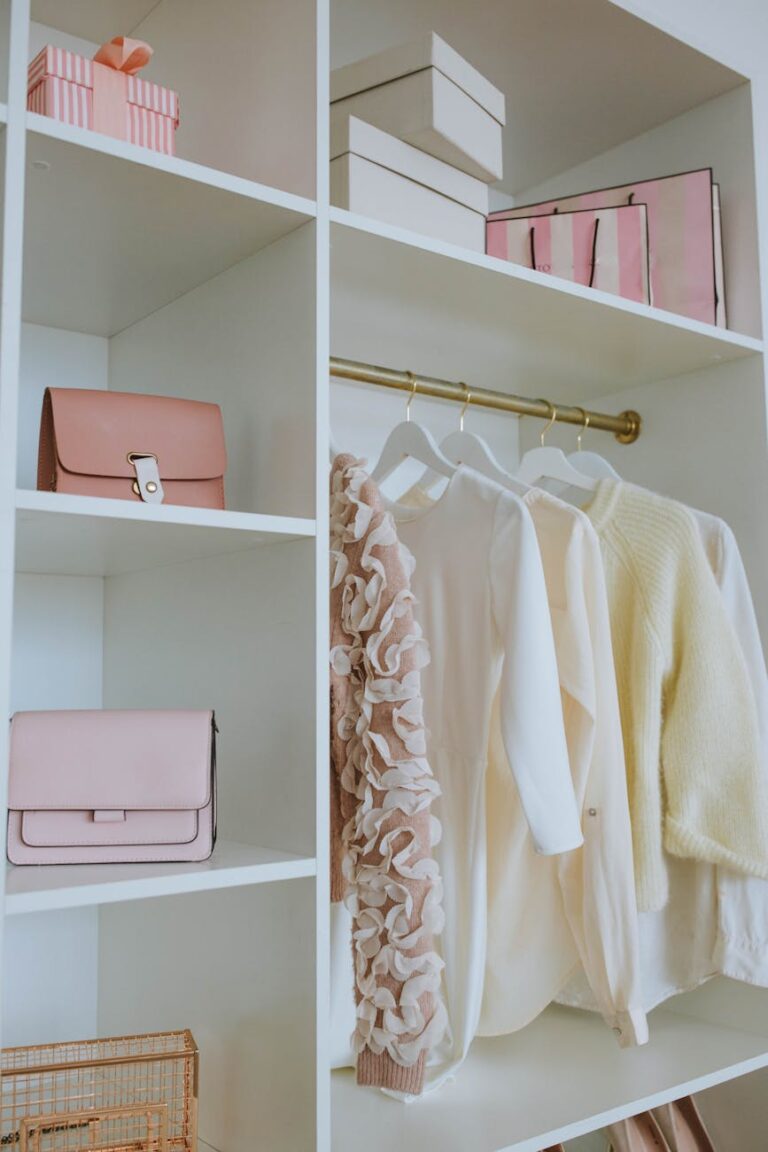
- Shelf Dividers: Acrylic or wire shelf dividers create individual compartments for each bag, preventing them from toppling over or getting squashed.
- Adjustable Shelving: Dedicated shelves with adjustable heights allow you to customize spaces for different bag sizes. Store bags upright to maintain their shape.
- Clear Bins/Boxes: For smaller clutches or seasonal bags, clear acrylic bins or breathable boxes can protect them from dust while still allowing visibility.
- Hanging Organizers:
- Over-the-Door Organizers: Pockets or hooks designed to hang over the back of a closet door, perfect for smaller bags or clutches.
- Hanging Shelves: Fabric or canvas hanging shelves with multiple compartments can be hung from a closet rod, offering soft, flexible storage for several bags.
- S-Hooks or Shower Curtain Rings: For bags with sturdy handles, these can be used to hang bags individually from a closet rod.
- Dedicated Bag Stands: For high-value bags, clear acrylic stands can display them beautifully on a shelf.
Tips for Purse Organization:
- Stuff Bags: To help maintain their shape, stuff unused bags with acid-free tissue paper, old scarves, or small pillows.
- Protect Hardware: If storing bags close together, consider wrapping metal hardware to prevent scratches.
- Rotate Bags: Store frequently used bags in easily accessible spots, and rotate seasonal or less-used bags to higher shelves or deeper storage.
Handbag Organization Closet: Displaying Your Style
Beyond just storing, effective handbag organization closet systems integrate bags seamlessly into your wardrobe, making them part of your daily styling process. This often involves a more visually appealing and accessible setup.
Creating a Handbag Display:
- Open Shelving: The most common and effective method. Display bags upright on shelves, leaving enough space between them to prevent crowding and allow easy access.
- Glass-Front Cabinets: For high-end collections, glass-front cabinets offer protection from dust while still showcasing your bags, mimicking a boutique experience.
- Color or Style Grouping: Organize bags by color, material, or type (e.g., totes together, clutches together) to make selection easier and create a visually pleasing display.
- Consider Bag Inserts: For frequently used bags, a bag insert can keep the interior organized and make it easy to switch contents between bags.
Integrating Handbags into a Larger System:
In a walk-in closet, a dedicated section with custom shelves for handbags can be a focal point. Combine this with drawer storage for wallets, keys, and other small accessories often carried in purses. The goal is to make selecting the perfect handbag as effortless as choosing an outfit.
Organizers for Purses in the Closets: Practical Solutions for Every Need
When it comes to organizers for purses in the closets, the key is to find practical solutions that fit your specific collection size, closet dimensions, and budget. It’s about finding the right tool for the job.
Reviewing Practical Options:
- Shoe Box Alternative: For small clutches or wallets, repurposed shoe boxes (or decorative storage boxes) can work well on shelves, especially if labeled.
- Magazine Files: Believe it or not, sturdy magazine files can be excellent for storing small clutches vertically on a shelf.
- Multi-Hook Hangers: Some specialized hangers feature multiple hooks, allowing you to hang several smaller bags from a single point on a closet rod.
- Tension Rods: In narrower sections of a closet, a tension rod can be installed at an appropriate height to hang bags with sturdy handles.
- DIY Solutions: Get creative with repurposing items like towel racks (for hanging scarves with bags), or even small cubby shelving units designed for shoes.
Choosing the Right Organizer:
- Assess Your Collection: Count your bags, categorize them by size and frequency of use.
- Measure Your Space: Know the dimensions of your closet shelves, rods, and door backs.
- Consider Material: Do you prefer soft fabric, sturdy acrylic, or versatile wire?
- Budget: Determine how much you’re willing to invest in your organization system. There are effective solutions at every price point.
Specialized Closet Needs: Baby, Coat & More
Beyond personal clothing and accessories, certain closets serve very specific purposes, each requiring a tailored approach to organization.
Baby Closet Organizer: Simplifying Little Ones’ Essentials
A baby closet organizer is about more than just cuteness; it’s about creating a highly functional and safe space for a constant rotation of tiny clothes, diapers, toys, and gear. The key is flexibility and easy access for busy parents.
Designing for Rapid Growth:
- Adjustable Shelving and Rods: Babies grow quickly, meaning clothing sizes change frequently. Adjustable hanging rods (often double-stacked for small clothes) and shelves are paramount.
- Drawers or Bins for Small Items: Baby socks, booties, hats, and burp cloths are tiny and easily lost. Drawers or labeled bins are essential for containing these small items.
- Dividers for Clothing Sizes: Use closet dividers to separate clothes by age range (0-3 months, 3-6 months, etc.) on hanging rods.
- Open Bins for Diapers and Wipes: Keep daily essentials like diapers, wipes, and creams in easily accessible open bins on a shelf or changing table.
- Toy Storage: Large, easily accessible bins or baskets on lower shelves are perfect for toys, making clean-up a breeze.
- Book Nook: A small set of shelves can house baby books, making them easy to grab for bedtime stories.
Safety Considerations:
- Anchor Furniture: Ensure any freestanding dressers or shelving units are anchored to the wall to prevent tip-overs.
- Cordless Blinds: If the closet has a window, opt for cordless blinds for safety.
- No Small, Loose Items Within Reach: Keep small items that could be choking hazards out of a baby’s reach.
Coat Closet Organization: Welcoming Tidiness at the Entryway
The coat closet is often the first and last closet guests see, making coat closet organization crucial for a welcoming and tidy entryway. It needs to handle bulky items, seasonal gear, and often, miscellaneous household essentials.
Maximizing a Multi-Purpose Space:
- Sturdy Hanging Rod: Ensure the rod is strong enough to hold heavy winter coats. Consider a single, full-length rod unless you specifically need double-hanging for shorter items.
- Overhead Shelf: Essential for storing hats, gloves, scarves (in baskets), and seasonal items like holiday decorations or camping gear.
- Shoe Rack or Mat: For boots and frequently worn outdoor shoes, a shoe rack or a durable mat will keep the floor clean and organized.
- Hooks for Bags and Umbrellas: Install hooks on the inside of the closet door or on the back wall for umbrellas, reusable shopping bags, or keys.
- Baskets for Accessories: Use baskets on the overhead shelf or on the floor for hats, gloves, and scarves, keeping them contained and easily accessible.
- Deep Shelves for Bulkier Items: If space allows, deep shelves can house items like vacuum cleaners, pet supplies, or cleaning tools.
Tips for a Functional Coat Closet:
- Declutter Seasonally: Remove out-of-season coats and accessories to free up space. Store them elsewhere if possible.
- Slim Hangers: Use slim velvet or wooden hangers to maximize hanging space.
- Shoe Storage Strategy: For a small closet, an over-the-door shoe organizer can free up floor space for boots.
- Add a Mirror: If the closet door is solid, adding a full-length mirror can be a practical and aesthetic touch for a quick check before heading out.
Budget-Friendly & Practical Solutions: Organization for Everyone
High-end custom closets are beautiful, but effective organization doesn’t always require a hefty investment. There are numerous practical and budget-friendly options available that can dramatically improve your storage.
Menards Closet Organizer: Quality on a Budget
For those looking for cost-effective yet reliable solutions, exploring options like the Menards closet organizer selection can yield impressive results. Retailers like Menards offer a range of modular systems, individual components, and accessories that allow you to build a customized system without the custom price tag.
What to Look for at Menards (and similar retailers):
- Wire Shelving Systems: Menards often carries various brands of ventilated wire shelving systems, which are excellent for general storage and are highly adjustable. These are a great starting point for any closet.
- Laminate/Particle Board Systems: Look for modular systems made from laminate or particle board. These typically include shelves, drawers, and hanging rods that can be configured to fit your space. They offer a more finished look than wire and are significantly more affordable than solid wood.
- Individual Components: They sell individual shelves, hanging rods, brackets, and drawer units, allowing you to mix and match or add to existing setups.
- Accessories: Don’t forget the smaller organizational tools like shoe racks, tie racks, belt racks, and various bins and baskets. These often make the biggest difference in day-to-day usability.
- DIY Potential: Many of these products are designed for DIY installation, making them even more budget-friendly as you save on labor costs.
Tips for Shopping Budget-Friendly:
- Measure Carefully: Before you shop, meticulously measure your closet dimensions.
- Plan Your Layout: Sketch out a basic plan of what you need (hanging, shelves, drawers) to avoid impulse buys.
- Compare Brands: Even within one store, different brands may offer variations in quality and price.
- Look for Sales: Keep an eye out for sales and promotions to get the best value.
DIY vs. Professional Installation: Weighing Your Options
When investing in a closet organizer, you’ll inevitably face the choice between a do-it-yourself project and hiring a professional. Both have their advantages and disadvantages.
DIY Installation:
- Pros:
- Cost Savings: Significant savings on labor costs.
- Flexibility: You can work at your own pace and make adjustments as you go.
- Personal Satisfaction: The pride of completing a project yourself.
- Cons:
- Time-Consuming: Can take several hours to a full weekend, depending on complexity.
- Skill Required: Requires basic carpentry skills, accurate measuring, and comfort with tools (drill, level, saw).
- Potential for Errors: Mistakes can be costly in terms of materials or wall damage.
- Best For: Simple systems (wire shelves, basic modular units), those with a good grasp of DIY projects, and tighter budgets.
Professional Installation:
- Pros:
- Expertise: Professionals have the tools and experience for flawless installation.
- Time-Saving: They complete the job efficiently, often in a single day.
- Guaranteed Quality: Reputable installers often offer warranties on their work.
- Custom Design: Often comes with design consultations to maximize space and aesthetics.
- Cons:
- Higher Cost: Significant additional expense for labor.
- Less Control: You hand over control of the installation process.
- Best For: Complex custom systems (walk-in closets with many features), those short on time or DIY skills, and when a perfect finish is paramount.
Hybrid Approach:
Consider purchasing modular units from a retailer like Menards and then hiring a local handyman for installation if you’re not comfortable with the DIY aspect but still want to save on custom design costs.
Designing Your Dream Closet: Tips for Success
No matter the size or purpose of your closet, a successful organization project follows a few core principles.
Assess Your Needs: The First Step to a Functional Closet
Before you buy a single organizer, take stock of what you have and how you use it.
- Declutter ruthlessly: Remove everything from the closet. Sort items into “keep,” “donate/sell,” and “discard.” Be honest about what you actually wear and need.
- Categorize: Group similar items together (e.g., all pants, all shirts, all dresses, all accessories). This helps you see how much space each category requires.
- Analyze your lifestyle: Do you wear more casual clothes or formal wear? Do you have many shoes, bags, or accessories? Do you need more hanging space or drawer space?
- Consider who uses the closet: Is it a single person’s closet, a shared space, or a specialized closet like a baby’s or coat closet?
Measure Accurately: Precision is Key
This step cannot be overstated. Incorrect measurements lead to frustrating returns and ill-fitting systems.
- Measure height, width, and depth: Do this at multiple points, as walls can be uneven.
- Note obstructions: Account for baseboards, window sills, electrical outlets, and door frames.
- Measure your items: Measure the length of your longest hanging clothes, the height of your tallest boots, and the dimensions of your largest bags to ensure your chosen system can accommodate them.
Consider Your Style: Aesthetics and Functionality Combined
Your closet should not only be functional but also aesthetically pleasing, especially if it’s a walk-in or frequently opened.
- Match your home’s decor: Choose materials and finishes (wood, laminate, wire, color palette) that complement the rest of your home.
- Personal preference: Do you prefer an open, airy look with wire racks, or a more concealed, finished look with drawers and doors?
- Uniformity: Using consistent hangers, bins, and baskets creates a cohesive and tidy appearance.
Maintenance and Ongoing Organization: Keeping the Clutter Away
An organized closet isn’t a one-time project; it’s an ongoing practice.
- “One In, One Out” Rule: When you buy a new item, consider donating or discarding an old one.
- Regular Purges: Do a mini-declutter every season or every few months.
- Put Things Away Immediately: Make it a habit to put items back in their designated spots after use.
- Adjust as Needed: As your wardrobe or lifestyle changes, don’t be afraid to reconfigure your organizational system. Flexibility is key to long-term success.
Frequently Asked Questions about Closet Organizers
Q1: What is the most effective way to organize a small closet?
A1: For small closets, focus on maximizing vertical space. Use double-hanging rods, vertical shoe racks, and over-the-door organizers. Slim hangers can save significant space. Consider decluttering frequently and utilizing the back of the door for accessories. A corner closet organizer can also convert awkward space into useful storage.
Q2: Are wire racks or solid shelves better for closets?
A2: Both have advantages. Closet organizer wire racks offer great visibility, air circulation, and are generally more budget-friendly and adjustable. Solid shelves provide a flatter surface, prevent small items from falling through, and offer a more finished look, especially when combined with a closet organizer with drawers. The best solution often involves a combination of both, depending on the items being stored.
Q3: How can I protect my expensive handbags in the closet?
A3: To protect expensive handbags, use a dedicated purse organizer for closet. Store bags upright on shelves (use shelf dividers if needed) and stuff them with acid-free tissue paper or small pillows to maintain their shape. Keep them in their original dust bags if available, or use clear breathable boxes. Avoid hanging bags by their straps for extended periods, as this can stretch or damage them.
Q4: What are some budget-friendly closet organization ideas?
A4: Budget-friendly ideas include using tension rods for extra hanging space or shoe racks, repurposing household items (like magazine files for clutches), and purchasing modular systems from retailers like Menards closet organizer options. DIY simple shelving or installing wire racks yourself can also save a lot of money compared to custom solutions. Fabric bins and baskets are also affordable ways to contain clutter.
Q5: How do I organize a shared closet effectively?
A5: In a shared closet, communication and clear boundaries are key. Divide the closet into equal sections or based on individual needs (e.g., one person needs more hanging, the other more drawers). Use distinct bins or baskets for each person’s items. Consider a closet organizer with drawers for personal items and labels to avoid mix-ups. Regular decluttering together also helps maintain order.
Q6: Can I really use a baby closet organizer for older kids?
A6: Absolutely! While labeled for babies, the principles of a baby closet organizer – adjustable rods, multiple shelves, and easily accessible bins – are highly adaptable. As kids grow, you can raise hanging rods, add more drawers, and swap toy bins for school supplies or sports gear. The modular nature makes it perfect for evolving needs.
Conclusion: Embrace a Life of Organized Serenity
The journey to a beautifully organized home begins with thoughtfully designed and implemented closet solutions. From the foundational strength of closet organizer wire racks to the sophisticated concealment of a closet organizer with drawers, every component plays a vital role in transforming chaos into calm.
Imagine stepping into your walk in closet organizer each morning, where every outfit, accessory, and pair of shoes is perfectly visible and within reach. Picture a tidy entryway thanks to meticulous coat closet organization, or a nursery where every tiny item has its place with a dedicated baby closet organizer. Envision your precious handbags beautifully displayed and protected by a clever purse organizer for closet or a comprehensive handbag organization closet system. Even challenging spaces like corners can become efficient storage hubs with a smart corner closet organizer.
Whether you opt for the robust and adjustable systems available at retailers like Menards, or choose to invest in a bespoke solution, the power of a well-organized closet extends far beyond just storage. It simplifies your daily routines, reduces stress, and enhances the overall beauty and functionality of your home.
It’s time to stop letting your closets overwhelm you and start creating spaces where you and your family can truly thrive. Discover the ultimate closet organization solutions and take the first step towards a cleaner, more clutter-free home today.